April 12th, 2022 — 3:23am
House of Gucci
***
 Lady Gaga demonstrated that in addition to her well-known singing talent, she had great acting chops. She played the girlfriend, then wife, and a lot more of one of the Gucci heirs magnificently portrayed by Adam Driver. This is a biographical crime drama. The film is directed by Ridley Scott and is based on the 2001 book by Sara Gay Forden titled “House of Gucci: A Sensational Story Of Murder, Madness, Glamor, And Greed,” which tells it all. At times, you may lose a beat of the story line or the role of a specific character, but the overall cinematic experience is quite engrossing. The supporting cast is great and features Jared Leto, Jeremy Irons, Salma Hayek, and Al Pacino.
We found it interesting to learn that Lady Gaga took into account how her longtime friend Tony Bennett felt about Italians being represented in films in terms of crime and that she aspired to “make a real person out of her character and not a caricature.” To achieve this she studied the voice and vocal cadence as well as the attitude of the real person she was portraying and tried to be “authentic from the perspective of a woman, not an Italian American woman.” She studied for 18 months speaking in accent for nine months of this period. She also ad libbed many of her lines including the film’s iconic quote “father, son, and House of Gucci”, which went viral after the release of the film. (The above information is from Wikipedia).
Comment » | 3 Stars, Biography, Crime, Drama
March 1st, 2022 — 7:10am
Te Ata
****
 Generally, there is not as much attention paid to the historical treatment of Native Americans as there is to other groups. This film focuses on a young girl growing up in Oklahoma in a small poor town made up mostly of Native Americans from the Chickasaw Nation tribe. Orianka Kilcher inhabits this character magnificently. As we see her growing up, she is drawn to acting and story-telling. She convinces her parents to let her go to a college in Oklahoma on a scholarship, where she comes under the tutelage and encouragement of some of her teachers. She develops a mission to tell the story of her people and does it extremely well. The trajectory from a poor Native American girl to an actress who appears on Broadway and eventually performs at the White House for the President of the Unites States is heartwarming and unforgettable.
This is the true story of Mary Thompson Fisher, best known as Te Ata. She is shown as a beautiful person who is portrayed magnificently by Ms. Kilcher in an unforgettable performance. Both mind and heart are captivated by this important film.
Comment » | 4 Stars, Biography, Documentary, Drama
January 8th, 2022 — 8:00am
King Richard
****
 Will Smith not only produced this film but played Richard Williams, the ambitious father of tennis greats Serena and Venus Williams. We follow this family of five girls from their early days in Compton, California to the world stage where they became the number 1 and number 2 world tennis stars. It is hard to believe this was the plan of Richard, the father, who not only dreamed of their great career from their early ages but trained them and then made decisions and arrangements for their coaching that led to their amazing success.
Aunjanue Ellis plays the mother, Demi Singleton is Serena, and Saniyya Sidney is Venus. The film is very skillfully directed by Reinaldo Marcus Green. There are wonderful tennis action scenes intergrated into the interpersonal dialogue. This cinematic magic is seen throughout the film from their early days of learning to play tennis to the dramatic world championship action. The skillful editing of tennis action involved throughout the film certainly will be considered for film awards as well the entire movie.
This is a heartwarming drama which provides insight into the marriage as well as the upbringing of five girls two of whom achieved worldwide acclaim.
It is interesting to learn that the two real tennis greats did not see the film until it was completed and previewed for them. They approved wholeheartedly of the final result. We think you will also provide thumbs up for the movie and the 2 hours and 18 minutes will zip by as a lightning fast tennis match.
Comment » | 4 Stars, Biography, Drama, Family / Kids, Sport, Uncategorized
November 20th, 2021 — 8:22am
Tic Tic Boom -nf
*****
 We just watched this great musical on Netflix. It is in the tradition of great Broadway musicals. In fact, it has a close connection to one of the greatest shows that ever was on the Broadway stage.
This is the true story of Jonathan Larson (Andrew Garfield), a young musical writer who is nearing an important birthday and is putting together a musical which he hoped would be his Broadway debut before he turned 30. The story takes place in the early 1990s. This was the time AIDS and gay men were being struck down with this fatal disease which is poignantly discussed in this movie via one of the characters who is a friend of the playwright. The main focus of the story is on Larson as he struggles to complete writing his show so he could put on a scheduled workshop where potential Broadway producers have been invited and will be attending including the legendary Steven Sondheim. At the same time Larson is putting together his final musical piece for the show, he is parting with his long-time girlfriend who will be leaving town to pursue her career which provides a very dramatic poignant moment. The music is terrific, the story is breathtaking and riveting. It reflects the dedication and heartbreak behind the scenes which is portrayed magnificently with song and dance.
The entire musical experience becomes even more meaningful when you know the behind the scene story upon which this movie is based. We see in the film, that this show did not make it to Broadway. In reality, Jonathan Larson did not give up. He put together another show called “RENT” which was destined to be one of the all-time Broadway successful musicals. However, sadly, Jonathan Lawson died of a fatal aneurysm the night before the show was to open. It is therefore quite fitting that another Broadway icon Lin-Manual Miranda produced and directed this film which we were pleased to give 5 stars.
Comment » | 5 Stars, Biography, Musical
August 25th, 2021 — 5:25am
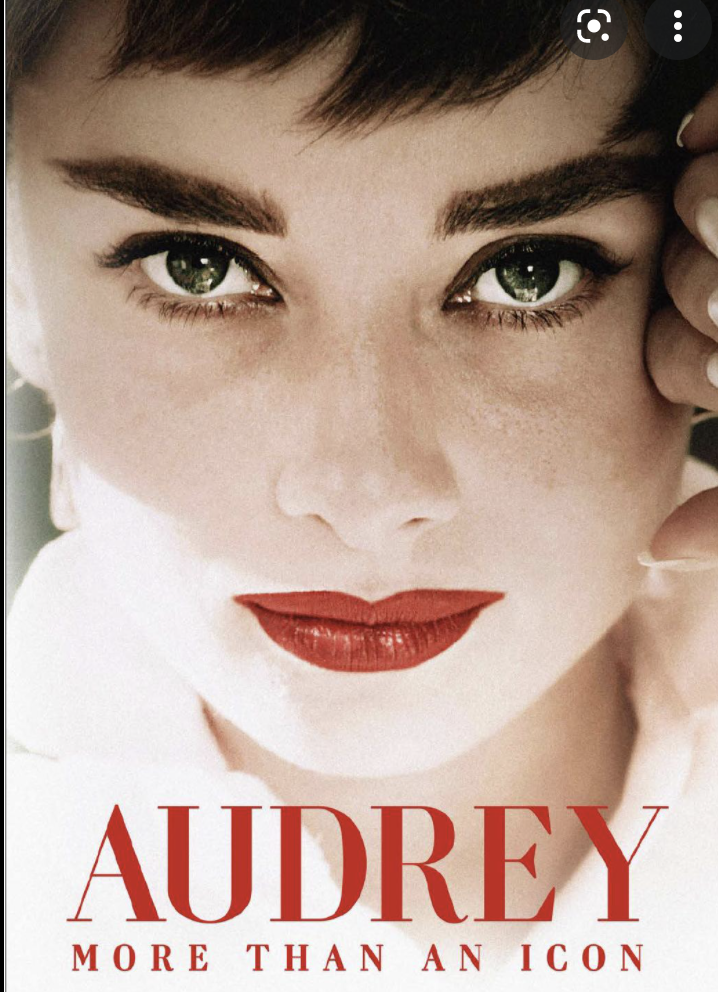
Audrey
***
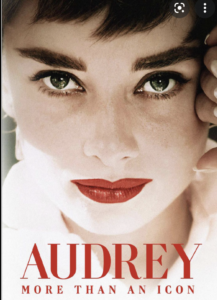 A good biographical film provides an insight into the character of the main subject, shows their life trajectory and highlights their accomplishments. Certainly, this film about Audrey Hepburn does these tasks in spades. We see her childhood brush with World War Two, her early years of dance and then her unsurpassed career in film. We get a great insight into how she approached her acting career by some of her co-stars, directors and producers. We briefly meet her various husbands and get glimpses of her children and one of her sons does provide some of the background narration of her later years. It is in the twilight of her life that we see her character emerge as an empathic humanitarian as she tirelessly traveled and raised funds as a spokesperson for UNICEF
However, what was missing in our opinion, was an insight into her childhood and meaningful relationships. We see how in her later years she sought out the father who had abandoned her when she was a child which was a big disappointment. We learn about her marriage to film icon Mel Ferrer which lasted. 14 years and produced one child, a son. She was then married to an Italian psychiatrist Andrea Dotti for 13 years and she had a second son. She was quoted as saying something to the effect that doctors pay more attention to their patients than their families. She never met her grandchildren who were born after she died in 1993 at the age of 63.
Watching this documentary one can’t help but be reminded of the luminous presence that she was. In the end, her outstanding memorable acting career as an icon during the Golden Years of Hollywood and her dedicated humanitarian work will leave an unforgettable, enduring legacy.
Comment » | 3 Stars, Biography
August 8th, 2021 — 9:00pm
Swan Song
****
 We initially meet Pat Pitsenbarger in a senior living facility where he appears to be in the final stages of his life. It appears that this is going to be a character study of this elderly man, but we soon realize that the journey we are about to undertake with the main character is going to be a much more complicated. It provides insight into the struggle of a gay man and the vibrant life of this man in the gay community that existed in the small mid-western town of Sandusky, Ohio. Pat Pitsenbarger was a real person who was a hairdresser in this town and he also performed at the gay night club that existed here. We soon begin to realize how his life touched so many others through his skill as a hairdresser as well as his sensitivity and caring for others. He did not realize it, but he was a role model for many other people.
In a discussion with the filmmaker, Todd Stephens, we are told that the story is based on a real person who lived in the town where the filmmaker grew up. This film is a moving, insightful examination of this character and his lifestyle. It is done extremely well. It will touch your emotions and provide an understanding of this man and his lifestyle, as well as being quite entertaining and enlightening. Many universal themes are on display and explored including love, loyalty, tolerance, understanding and forgiveness. It feels genuine and draws you in. This also adds up to an excellent cinematic experience and a highly recommended film.
Comment » | 4 Stars, Biography, Drama
May 18th, 2021 — 1:58am
May 16, 2021
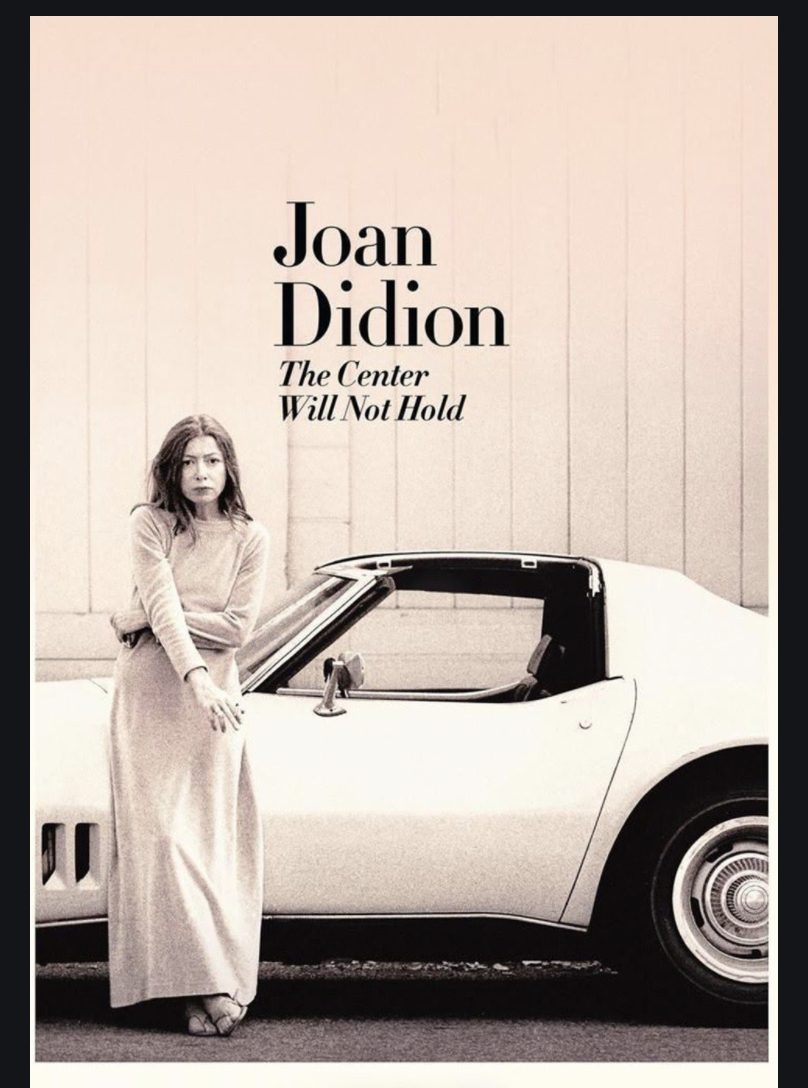
The Center Will Not Hold
***
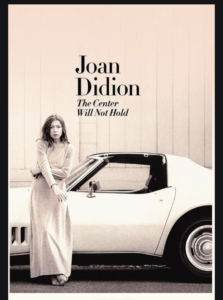 This is a 2017 biographical film about the story of the iconic writer, Joan Didion. It is directed by her nephew actor, Griffin Dunne, and was produced by her cousin, Annabella Dunne. This probably explains why the filmmakers appeared to have such easy access to the main subject as well as so many personal videos and footage of her life. While we are contemporaries of the main subject and we are familiar with the various cities where she has lived on both coasts, our lives have been quite different. We were in San Francisco at the same time as she was. While one of us was a newly married intern at San Francisco General Hospital and the other was a newly minted social worker, Ms. Didion was at parties with Janis Joplin, Harrison Ford, Brian De Palma, Martin Sarkozy, and Steven Spielberg. The film gives us a very intimate portrait of this amazing talented writer who is married to John Dunne, a very talented writer himself. Whereas some well-matched couples can finish each other sentences, this dyad were able to edit and finish each others manuscripts.
It is clear that Ms. Didion was an extremely talented sought after writer from top magazines such as Vogue and has written some very well received novels. Her personal experiences and her emotional life is clearly captured and reflected in this film and includes the very meaningful relationship that she had with her husband and her adopted daughter who died at the age of 39 shortly after the death of her father and Ms. Didion’s beloved husband.
What makes this movie a meaningful cinematic experience is not only the words and life story of the main subject, but how well personal film and video footage is weaved into the storyline along with contemporary clips reflecting the times and life of this amazing woman.
Comment » | 3 Stars, Biography, Documentary
March 11th, 2021 — 6:26am
Mank
***
 To fully appreciate this film, you probably need to be a Hollywood insider and know the history of the real characters. It is the story of Herman Mankiewicz (Gary Oldman) who apparently had been a successful playwright and is now working on a script for the movie Citizen Kane, which is the story of William Randolph Hearst. Mankiewicz who had been recognized as a terrific writer is now an alcoholic and recently broke his leg in an accident. He is working with a younger Orson Welles who would be the director of the Citizen Kane movie. Mank is directed by David Fincher, which is based on a screenplay by his late father Joseph Fincher. Although it was interesting and certainly well acted, we did not feel that we appreciated the subtleties of this movie by apparently not really knowing the story behind many of the characters.
Comment » | 3 Stars, Biography
December 15th, 2020 — 4:47am
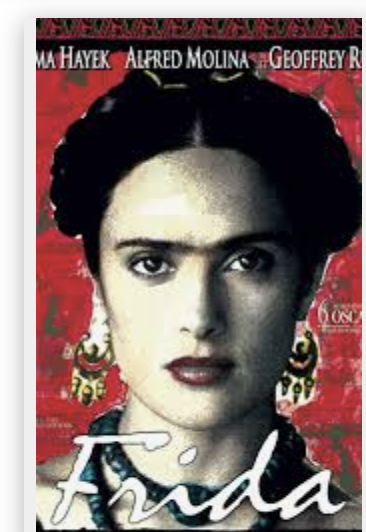
Frida- ( Netflix)
****
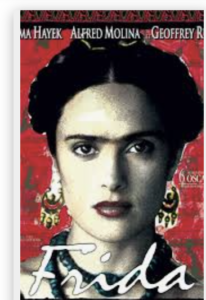 This is moving romantic biography about the Mexican artist, Frida Kahlo. It begins with a bus accident which severely injured her legs, in which she made a good functional recovery. She was able to pursue her artistic inclinations as a painter and then met one of Mexico’s most famous and revered artist, Diego Rivera. Much of the story is based on their tumultuous romantic relationship, which included a phase where they took in a Russian revolutionist by the name of Leon Trotsky who had fled to Mexico after Stalin was out to destroy him and his ideas.
This film, which was released in 2002, is based on a 1983 book by Hayden Herrera. The movie was directed by Julie Taymor and stars Selma Hayek who was nominated for an Academy Award for best actress in a leading role in this film. It also features Alfred Molina as Diego Rivera as well as costars Ashley Judd, Edward Norton, and Antonio Banderas. The film blended the passion of Mexican music with a sexual romantic storyline based on real well-known people. It is a worthwhile cinematic experience.
Comment » | 4 Stars, Biography, Drama, Romance
November 15th, 2019 — 6:33am
****
A Beautiful Day In The Neighborhood-sp
 For a generation that grew up with Mr. Rogers as their friend, comforter, and beacon of honesty and truth, it must be very gratifying to see Tom Hanks embody their childhood hero. This movie has been 10 years in the making by screenwriters, Micah Fitzerman-Blue and Noah Harpster, who worked very closely with producer Youree Henley and his associates and ultimately involved Marielle Heller as the director of the movie. They approached the story by focusing on a reporter, in reality Tom Junod, who is named Lloyd Vogel in the film and played by Matthew Rhys, who wrote an article for Esquire Magazine built around his interviews with Mr. Rogers. The reporter brought to the table his own personal story of alienation from his father, which came up during his interactions with Mr. Rogers. They developed a personal relationship, which was very meaningful to the reporter and literally changed his life. In a sense, the story is a parable for a successful psychotherapy where insight and change ultimately happen. However, in this case, it was Rogers’ sensitivity and empathy for his interviewer over a period of time which made a big difference in the life of this reporter. This movie is very well done using the background and TV set where the actual Mr. Rogers’ show took place in Pittsburgh. However, the real success of the movie is Tom Hanks, who not only captured the style and mannerisms of Fred Rogers but also radiated his warmth and empathy. (2019).
Comment » | 4 Stars, Biography, Drama




 Lady Gaga demonstrated that in addition to her well-known singing talent, she had great acting chops. She played the girlfriend, then wife, and a lot more of one of the Gucci heirs magnificently portrayed by Adam Driver. This is a biographical crime drama. The film is directed by Ridley Scott and is based on the 2001 book by Sara Gay Forden titled “House of Gucci: A Sensational Story Of Murder, Madness, Glamor, And Greed,” which tells it all. At times, you may lose a beat of the story line or the role of a specific character, but the overall cinematic experience is quite engrossing. The supporting cast is great and features Jared Leto, Jeremy Irons, Salma Hayek, and Al Pacino.